Glass packaging
AI Agents built for Glass Packaging.
Boost density, lower fire risks, and automate everything from the shear to the palletizer.
Out-of-the-box detection
What our Glass packaging-specific AI agents are pre-trained to detect out of the box.
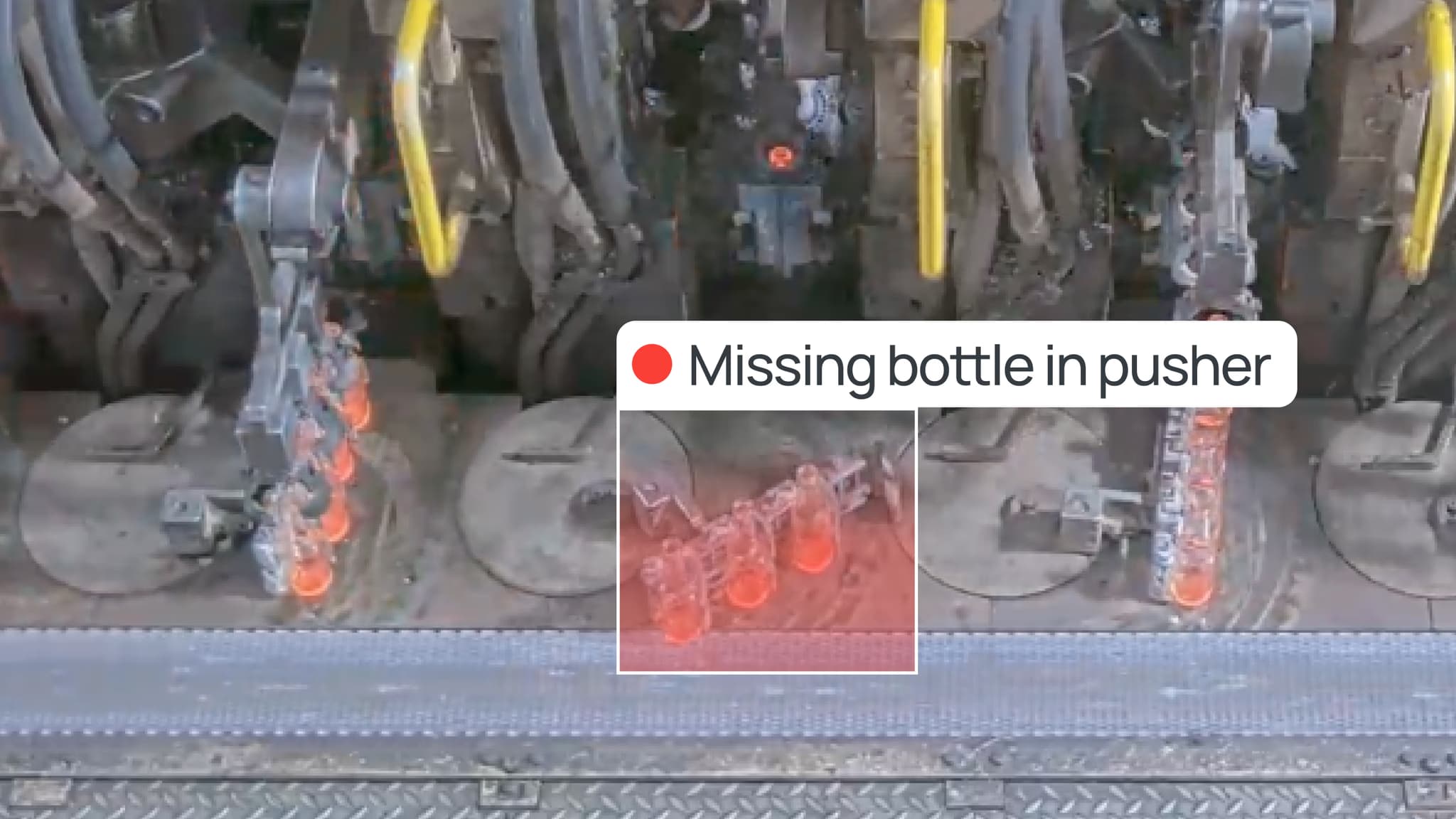
- Microstop
- Material jam
- Faulty machine movement
- Faulty material infeed
- Incorrect spacing
- Flawed intake
- Stuck material
- Machine running empty
- Placement errors
- Buffer over/underflows
- Line blockage
- Misaligned product
- Tipped product
From camera to action
Automate your vision-based workflows in days, not months.
- 01
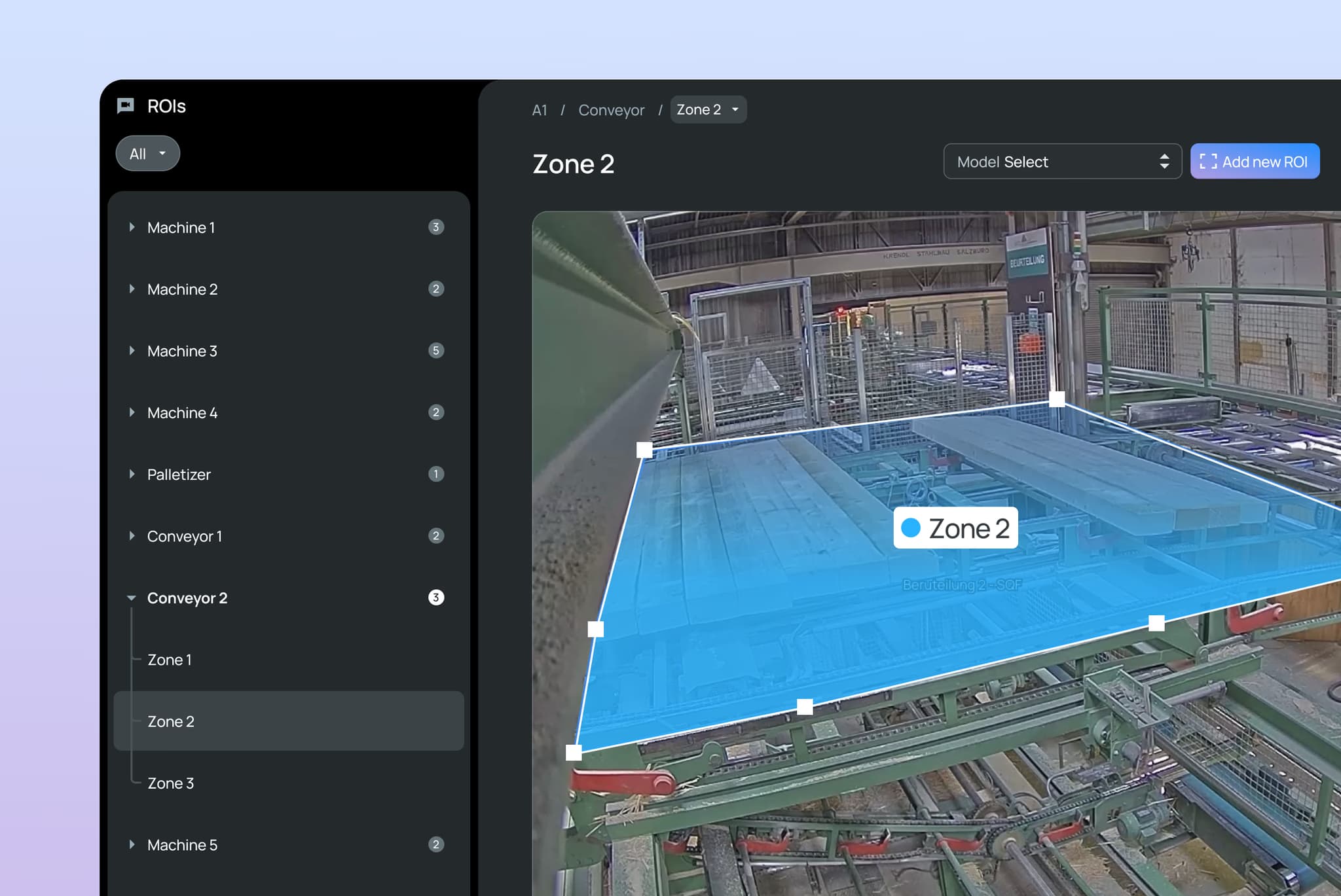
Define critical areas
Outline the zones that matter on each feed — the fill point, the exclusion area, the stacked output — so the agent watches exactly where loss and risk show up.
- 02
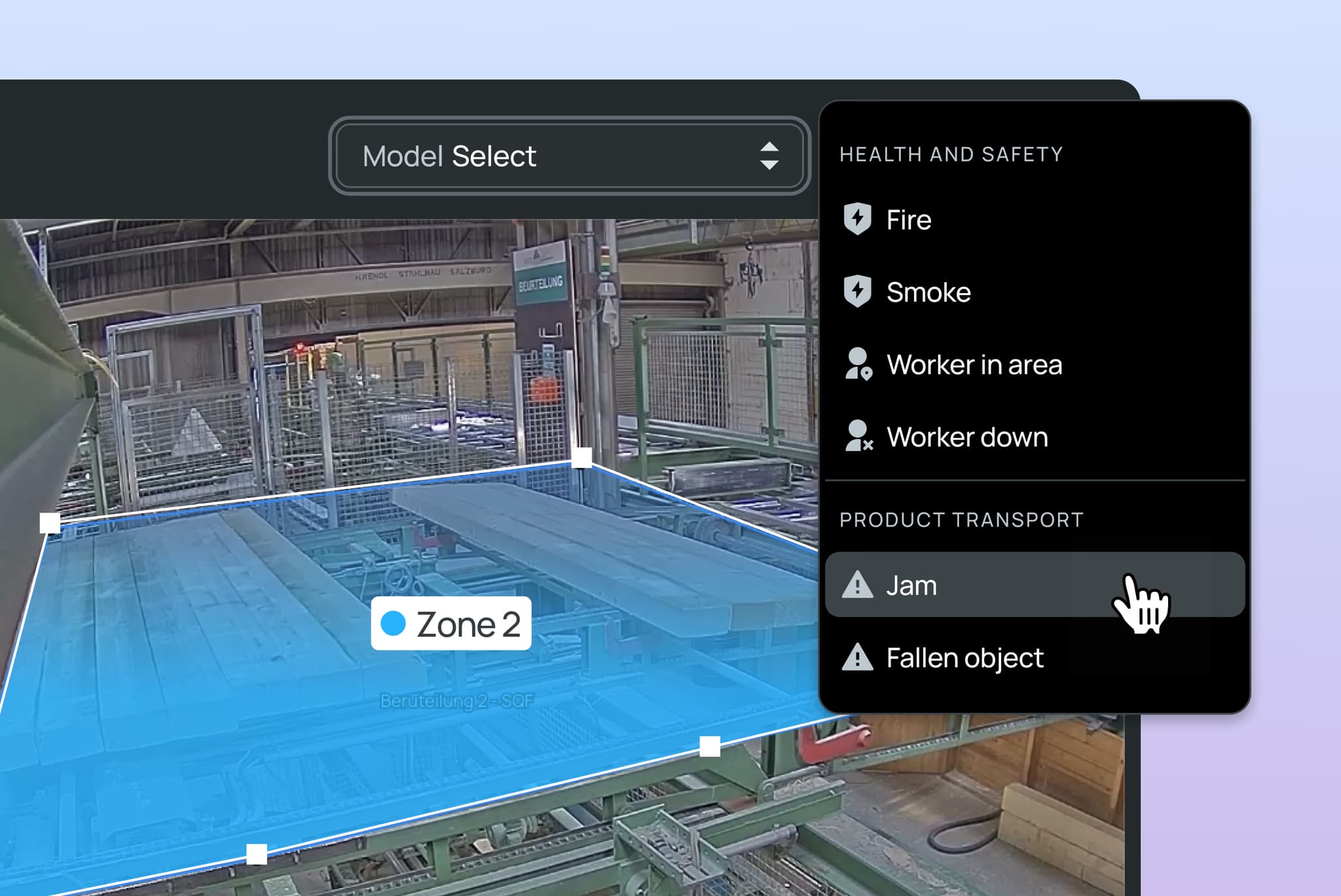
Define visual triggers
Start from our pre-trained trigger library or train your own. A single stream can run several triggers at once, each watching for a different event.
- 03
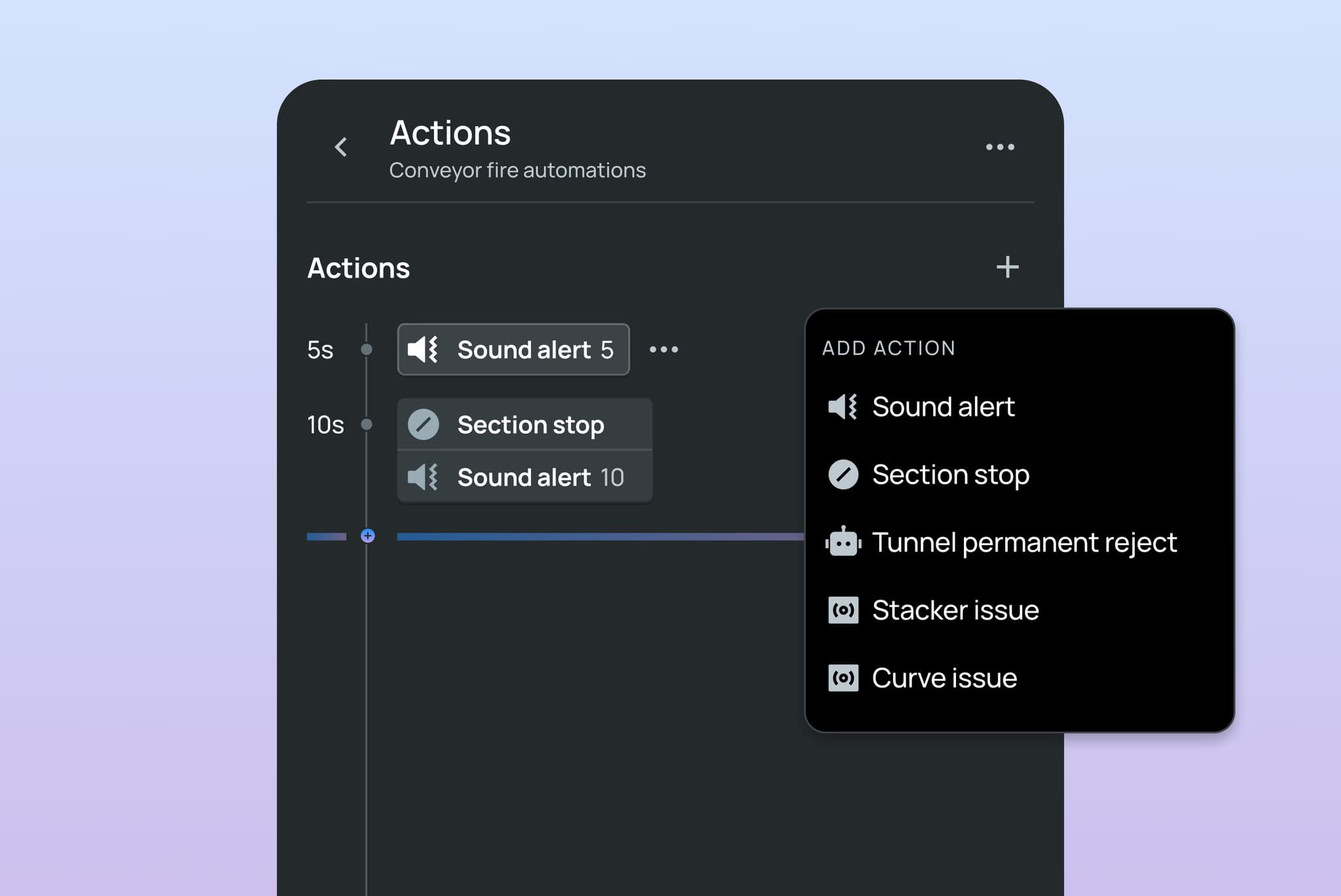
Define actions and escalations
Set how the agent responds — a dispatcher ping, a logged event, or a closed-loop stop — and chain those into escalation paths from first alert to full intervention.
Let's look at your line together.
We'll walk through a representative case from your industry on video. Specific answers to specific questions.